A polished renovation plan usually covers finishes, wall colours and lighting, yet rarely maps the route taken by dust. Cutting channels, drilling, sanding, stripping plaster or cutting stone can release fine particles that do not settle immediately. Concrete, brick, mortar, granite and many engineered stones may contain crystalline silica; machining timber and MDF creates different dusts that also require control.
This is not a diagnosis or a site-specific safety plan. In an occupied home, the contractor must assess the risks and select the correct method. The client can still improve the project by asking about dust prevention, extraction, zoning and cleaning before accepting a quotation.
1. Capture dust at the tool
The most effective sequence does not begin with a mask. First ask whether cutting or sanding on site can be avoided through pre-sized components, workshop fabrication or a lower-dust process. If the task is unavoidable, the next step is engineering control at the point of generation.
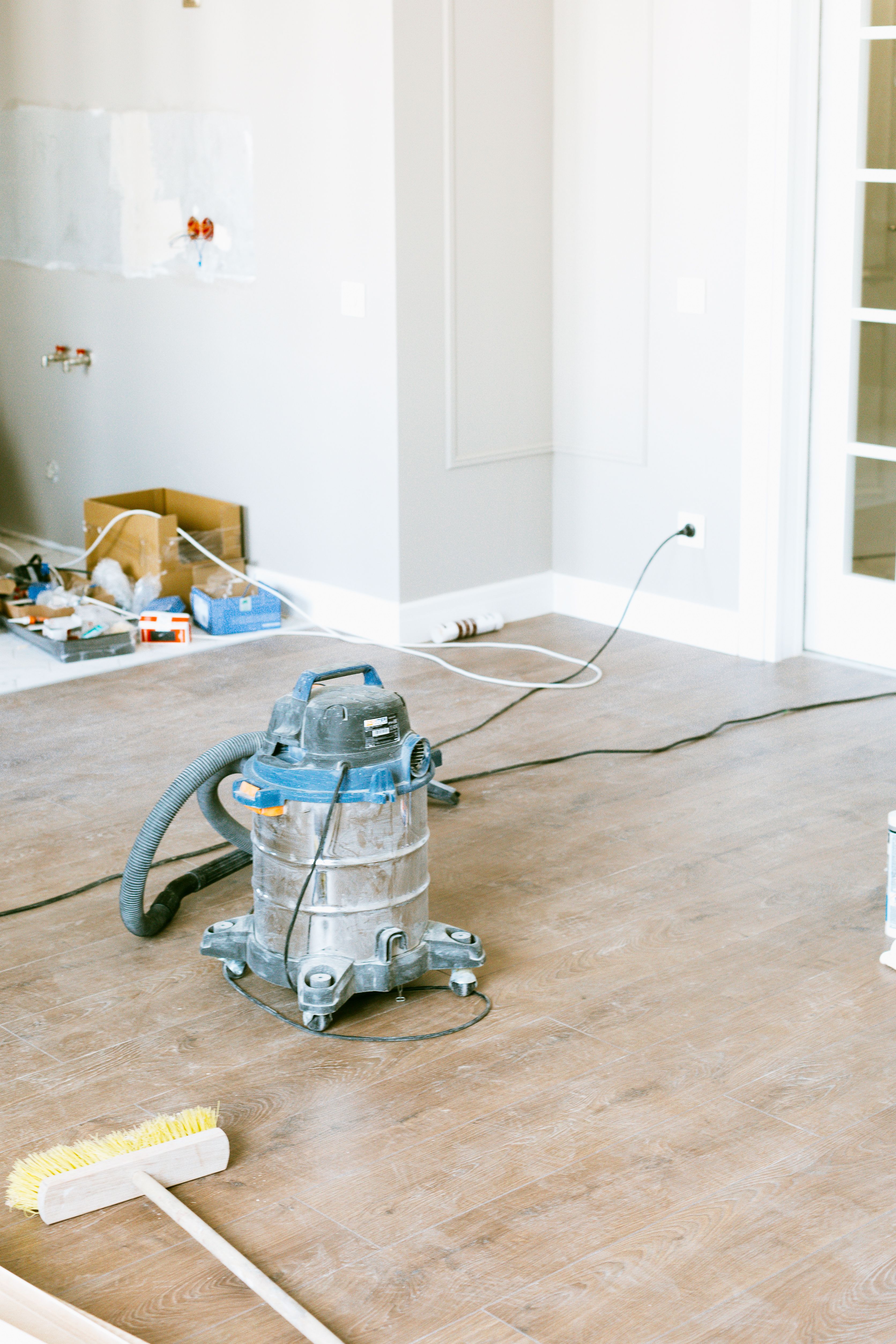
NIOSH and EU-OSHA guidance highlights wet methods, on-tool local exhaust ventilation, or a combination where appropriate. The system works only when the shroud fits the tool, airflow is adequate, filters are not blocked and the operator follows the instructions. A general domestic vacuum cleaner is not a substitute for an industrial dust extractor selected for the task.
2. Create clean and contaminated zones
Plastic sheeting is useful when it is part of a system. Define the work-zone boundary, separate openings with a closable or zipped dust barrier, deal with vents and penetrations as instructed by the competent contractor, and plan a single controlled access route.
Do not store work clothing, demolition waste or dusty tools in the clean zone. Children, pets and occupants who are not needed for the work should stay out. Agree how debris will leave the building without turning the corridor, stairwell or rest of the home into a trail of dust.
Air movement needs its own plan. An open window may help, but an unfavourable draught can carry dust into other rooms. The objective is to prevent contaminated air from flowing towards clean areas; the method depends on the dwelling, the operation and the equipment.
3. Do not finish with a dry broom
Both HSE and NIOSH warn against dry sweeping and compressed-air blow-down because they can return fine dust to the air. The cleaning plan should specify a suitable industrial vacuum, filter handling in line with the manufacturer's instructions, and wet wiping where appropriate.
The dust bag or container must also be changed without releasing its contents back into the room. “We vacuumed” is therefore not a verifiable handover standard. Ask what equipment and filter are used, how waste is sealed, and who is responsible for the final clean.
4. Respiratory protection is not a universal accessory
High-dust work may require respiratory protection in addition to engineering controls. It should not be selected from a photograph or guessed from a hardware-store shelf. The hazardous material, likely concentration, task duration, face fit and other protective equipment all influence what is suitable. The contractor should be able to show that the equipment is appropriate, fits the wearer and is supported by training.
Most importantly, a mask does not make a visible dust cloud acceptable. Emissions must first be reduced through the work method, water, extraction and containment.
5. Five questions for the quotation
- Which stages will create dust from concrete, brick, stone, plaster, timber or MDF?
- Which operations can be completed off site or with pre-sized components?
- What wet method or on-tool extraction will be used, and how will its performance be checked?
- How will the work zone be isolated, people routed and waste removed?
- What exactly are the equipment, sequence and responsibility for the pre-handover clean?
These questions do not slow down a good contractor. They turn an assumption into a shared and verifiable requirement before work begins.
OtthonTrend Approved checkpoint
Good dust control is not one product but a chain of decisions: less dust generated on site; extraction or water at source; a separated work zone; controlled movement; suitable personal protection; and cleaning that does not create another dust cloud. At handover, inspect more than visible surfaces: ask for a clean exit route, sealed waste and a documented final clean.
EU-OSHA / OSHwiki – Respirable Crystalline Silica
NIOSH – Safe Work Practices: Silica
Editorially reviewed content