Decorative lighting may look like a low-power mood accessory, but a string powered from the mains remains an electrical product. During Advent 2025, the accredited laboratory of Hungary’s National Trade and Consumer Protection Authority (NKFH) tested 58 types of mains-powered lighting string and decorative electrical item; 56 were found to present an electric-shock hazard. Faults included accessible live parts, an undersized plug, insufficient conductor cross-section, inadequate insulation, sharp edges, a short supply lead and products marketed for outdoor use without protection against water.
This does not mean that 96.6 per cent of all string lights on the market are dangerous. The communication reports the outcome for the 58 products selected by the authority, not a representative market sample. The risk is nevertheless real. An NKFH summary published in 2026 says Hungarian authorities submitted 317 dangerous-product alerts to the EU Safety Gate system in 2025, and decorative lighting strings accounted for 22 per cent.
1. Check the seller as well as the light
Choose a retailer whose name and contact details can still be identified later, and keep the receipt or invoice. With an anonymous temporary seller, product origin may be uncertain and a complaint becomes harder if a fault or recall emerges.
For an online purchase, save the product page and order confirmation. A photograph is not enough to identify a product; retain the brand, type or model number and the details of the manufacturer, importer or EU distributor.

2. Look for an identifiable responsible operator and Hungarian instructions
The pack should state the manufacturer, importer or distributor, technical details and model number, and it should include safety information in Hungarian. Do not let a discount override damaged, opened, relabelled or incomplete packaging.
The instructions should say clearly whether the lights are for indoor, outdoor or dual use, how they may be fixed, whether another set may be connected, and which power supply belongs to them.
3. CE marking is mandatory, but it is not an independent quality seal
On mains electrical equipment, CE marking indicates that the manufacturer declares the product to comply with applicable EU requirements. Under the relevant EU directive, the manufacturer must prepare technical documentation and an EU declaration of conformity, then affix the CE marking visibly, legibly and indelibly.
A missing CE mark is a clear warning, but the mark alone does not replace other checks. Also inspect the responsible economic operator’s details, instructions, cable, plug and intended environment.
4. For outdoor use, read the IP code—not the snowy photograph
Alongside the word “outdoor”, look for an IP rating. NKFH guidance says the second digit, which indicates water protection, must not be 0 for outdoor use and should be at least 1. That does not mean every non-zero value is sufficient for every weather condition.
Follow the manufacturer’s precise limits: a covered balcony, open garden, splashing water and prolonged rain are not equivalent exposures. Check the rating of the power supply and connection point separately; do not inspect only the light cable.
5. Inspect the full cable and plug
Do not buy or use lights with a cable that is unusually thin, kinked, cracked, sticky or exposes metal. The plug should not have loose pins, burrs, discolouration or signs of overheating. The power-supply label must remain legible and the unit must belong to that exact set.
Before use, unplug the product and lay out the entire string. If you find damage, do not wrap it in a home repair or substitute an unknown adapter. Remove it from use and pursue a complaint.
6. Connect only as many sets as the manufacturer permits
The official review found products that did not state the maximum number of strings that could be interconnected. If there is no clear limit, do not build a longer chain by guesswork. A connector may fit physically without proving electrical compatibility.
Do not mix components from different manufacturers, voltages or power supplies. The number and power rating in the instructions—not “one more will fit”—should define the upper limit.
7. The cable route is part of the safety plan
Do not run the cable beneath a door, window or furniture edge where insulation may be crushed or abraded. Do not cover it with heavy textiles, paper or easily ignited decoration, and keep it away from heat, open flame and locations where water may reach it.
Avoid metal staples or nails that could pierce the cable. At the height of children or pets, a hanging loop and easily pulled connector can also create a mechanical hazard.
8. After switching off, check the product databases too
Do not leave lights operating in an empty home or while sleeping. When disconnecting, grip the plug rather than pulling the cable. If you notice flickering, odour, unusual heat, crackling or discolouration, remove the product from use immediately.
Before purchase and later, search the model in the NKFH dangerous-products database and the EU Safety Gate system. The model number and a pack photograph are useful alongside the name. If a recall applies, follow the authority’s and retailer’s instructions and do not pass the product on.
OtthonTrend quick checklist
- The seller, manufacturer or importer and exact model are identifiable.
- Hungarian-language use and safety information is supplied.
- CE marking is visible, but it is not your only decision criterion.
- Indoor or outdoor use is clear; for outdoor use you checked the IP code.
- The cable, plug and power supply are undamaged and show no heat or discolouration.
- The maximum number of connectable sets is stated and you do not exceed it.
- The cable is not pinched, pierced, covered or exposed to water or heat.
- You checked the model in NKFH and Safety Gate databases and disconnect it when not in use.
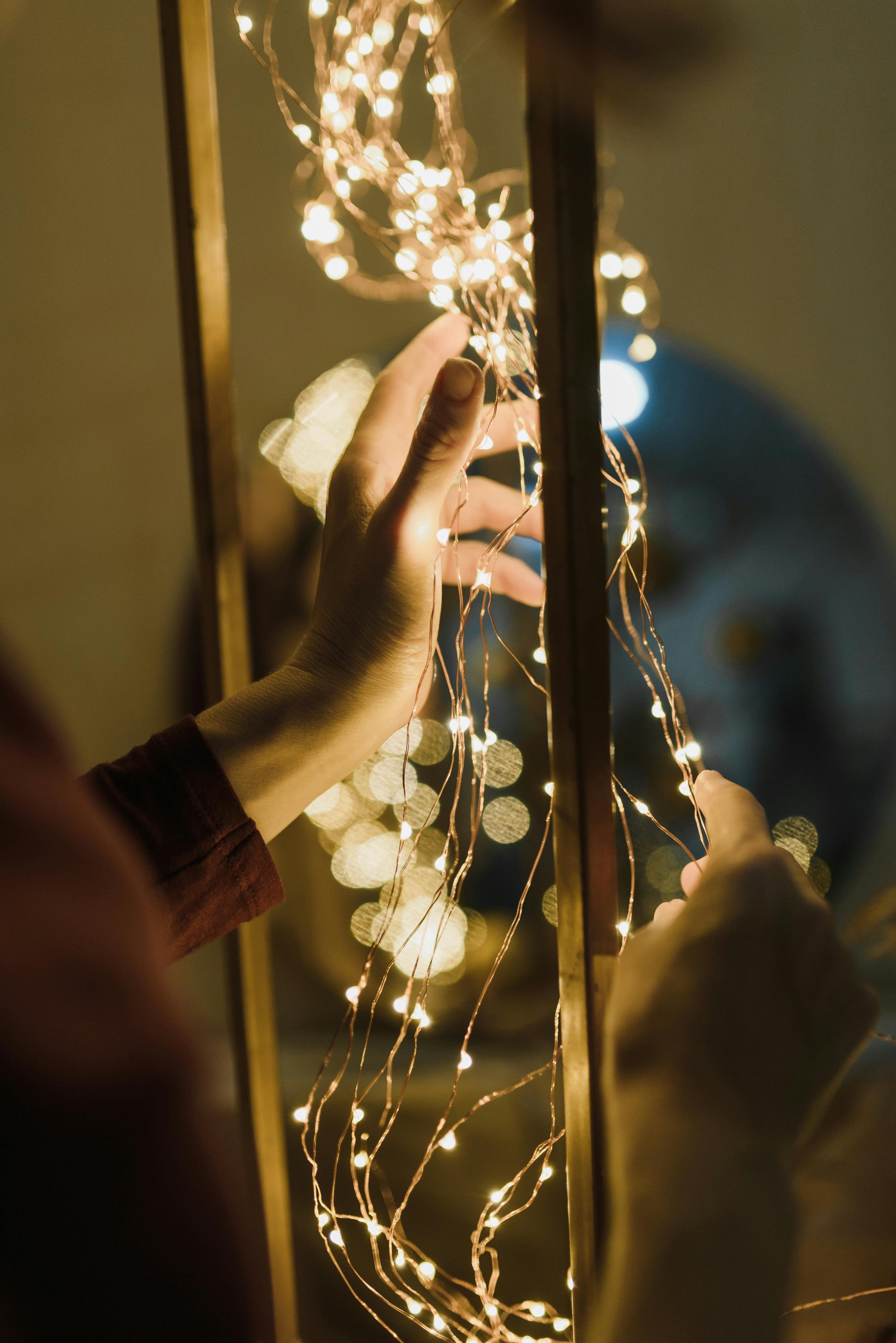
OtthonTrend did not conduct its own product test, does not publish a brand ranking, and this article is not sponsored. Laboratory results and product-safety figures come from official NKFH communications; the photographs are illustrations and do not show the tested products.
NKFH: Veszélyes termékek adatbázisa
NKFH: Screening of dangerous products – Hungary in sixth place in EU ratings (2026)
Editorially reviewed content