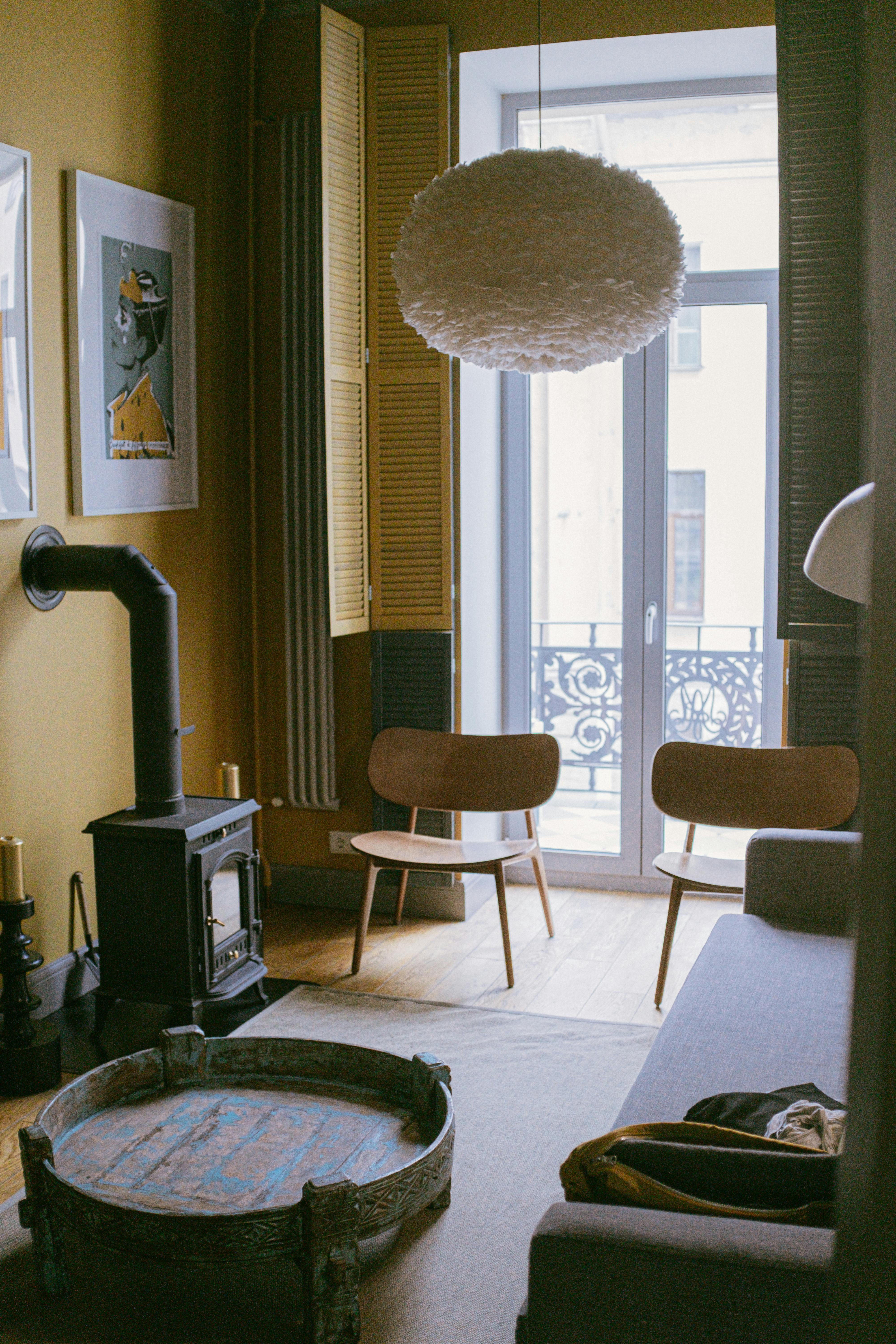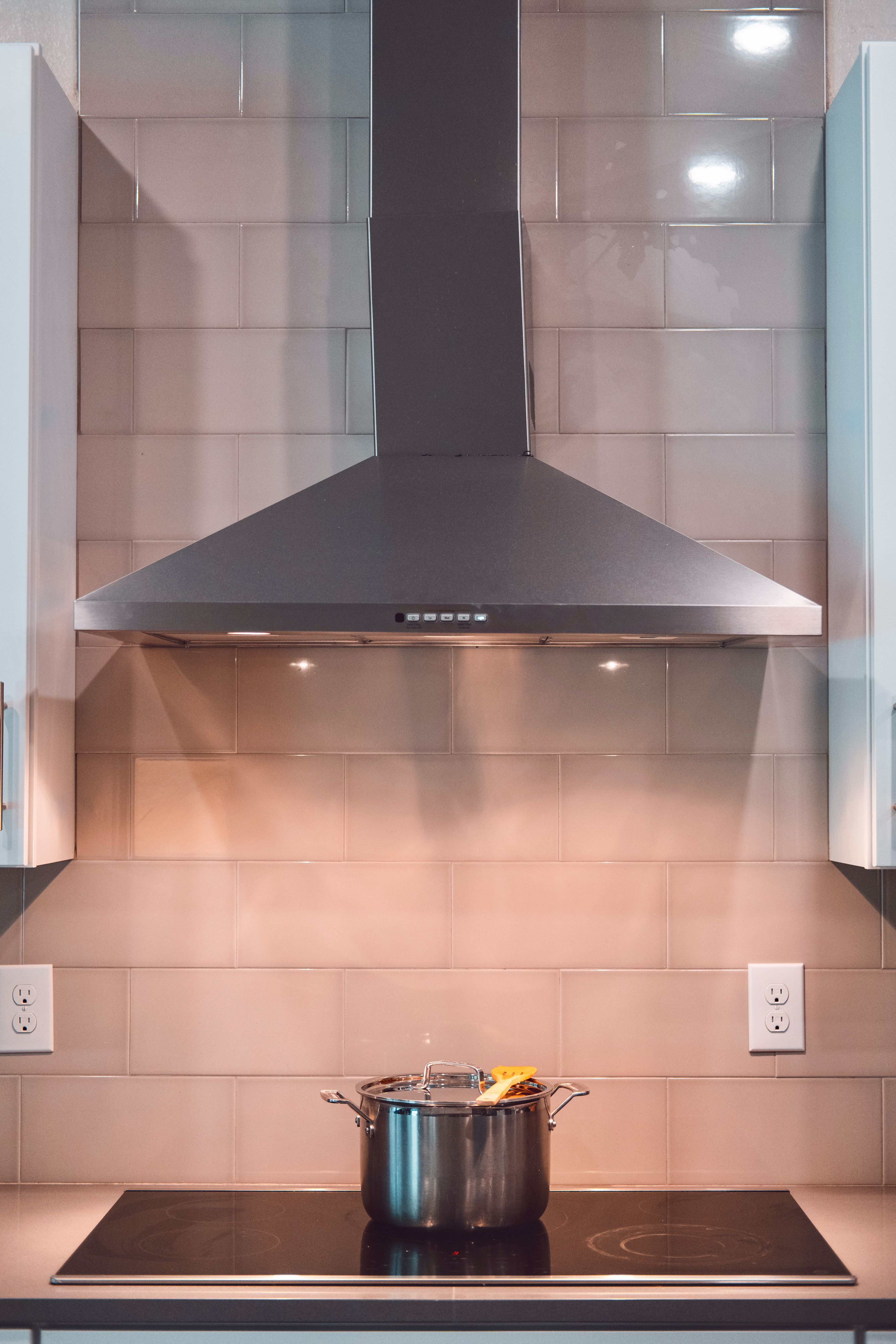
A cooker hood is not an isolated kitchen appliance
When planning a kitchen, it is easy to focus on width, noise, colour and cabinet integration. A ducted cooker hood, however, removes air from the home, so an equal volume must be allowed back in through a controlled route. If the property contains a gas appliance, fireplace or other combustion device that uses room air, their interaction needs to be resolved before the cabinetry and hood are ordered.
A warning published by Hungary's National Directorate General for Disaster Management on 12 October 2026 stresses that open-flued heaters and water heaters use indoor air, while powerful extraction can alter airflow. The inspection criteria in Hungary's 21/2016 Ministry of Interior decree also classify the situation as dangerous when adequate make-up air is not provided while an open-flued appliance operates alongside a cooker hood, exhaust fan, central vacuum, tumble dryer or portable air conditioner.
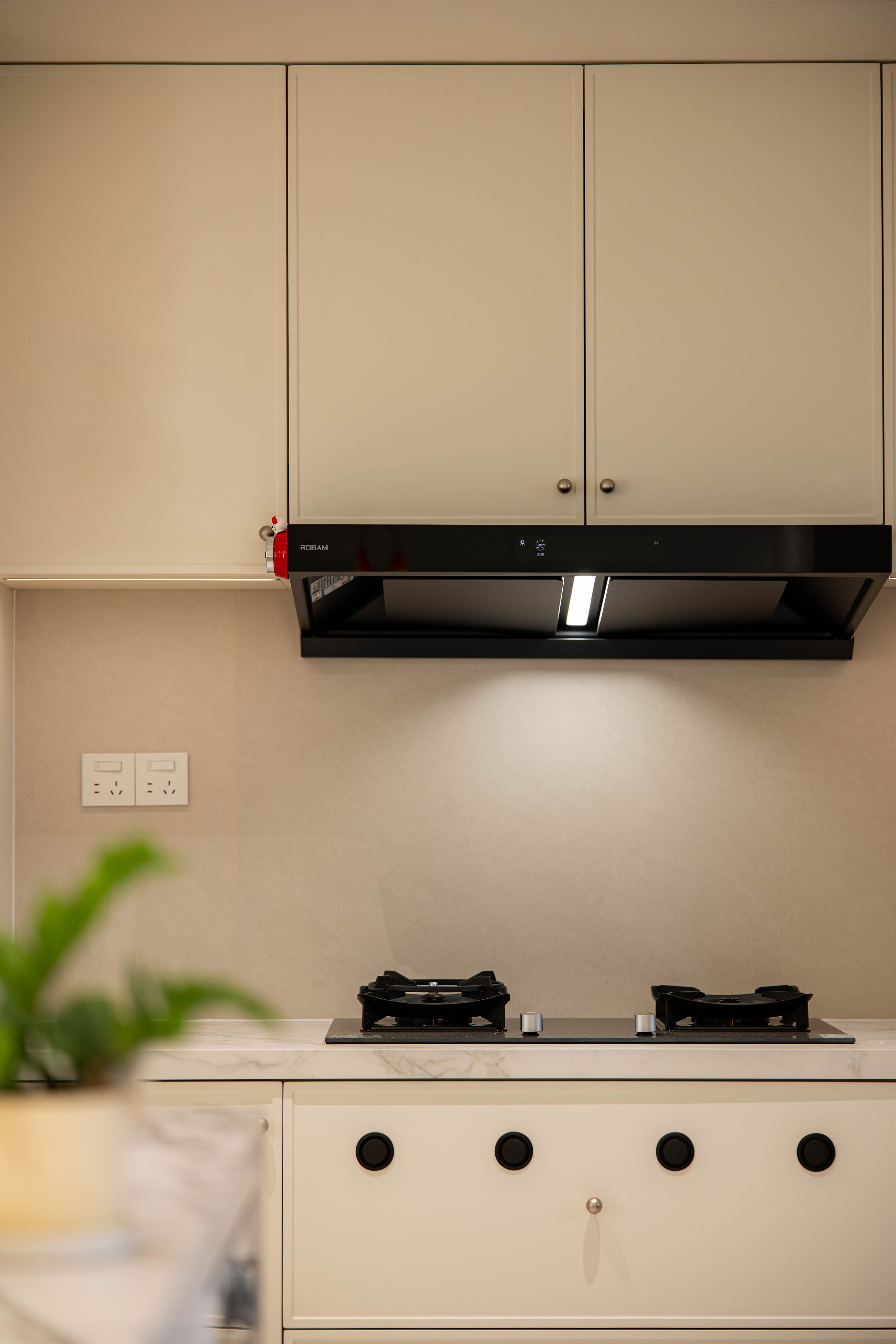
Identify the appliances first — with a professional
The key question is not the hood brand but the combustion and flue arrangement. Type A and B open-flued appliances use air from the room. Type C room-sealed appliances draw combustion air from outdoors. Do not guess from the casing or appearance: retrieve the appliance documents and commission an on-site survey by an authorised building-services or gas designer.
The survey should cover the whole dwelling, not only the kitchen. List every device that may affect the air balance: boiler, water heater, fireplace, stove, cooker hood, bathroom fan, central vacuum, tumble dryer and portable air conditioner. Record the model, location and flue route, as well as the doors and openings that connect the rooms.
A new window changes the whole system
Replacing a naturally leaky old window can transform the home's air supply. Guidance from MVM and disaster management both emphasises that required air must be supplied deliberately and ventilation openings must not be covered or blocked. Occasional window opening is not the same as continuous, correctly sized make-up air.
Where a Type A or B appliance is present, official disaster-management guidance says that installing airtight windows or extraction equipment needs a design by an authorised professional and may require approval by the relevant gas distribution licensee. The exact process must always be confirmed for the specific dwelling, appliance and local provider.
What should the renovation brief contain?
1. Appliance inventory. Photograph, rating plate, documentation, room and flue route for every relevant device.
2. Air-path sketch. Mark the kitchen, appliance rooms, doors, existing air inlets, vents and extractor discharge route.
3. Simultaneous operation. Ask for the hood, fans and every room-air combustion appliance to be assessed together, not one by one.
4. Professional design. An authorised specialist should define the location and capacity of make-up air, the extraction route, backflow protection and any required approvals.
5. Commissioning check. After installation, the system should be tested under realistic operating combinations rather than merely inspected visually.
6. Maintenance plan. Hood grease filters, air inlets, combustion appliances and flues all need regular inspection and care.
Ducted or recirculating?
A ducted hood sends air outdoors; a recirculating model filters it and returns it to the room. That distinction alone does not prove that either option is safe or suitable in every home. Cooking moisture, odours, maintenance, the building fabric and combustion-air supply form one design problem. Do not make the decision from a single marketing figure or cabinet drawing.
Six warning signs
- An air inlet has been painted over, taped shut or hidden by cabinetry.
- Airtight windows were installed without an air-supply review.
- The hood duct is shown as connecting “somewhere” on the cabinet plan.
- Nobody has assessed the hood and boiler running at the same time.
- Appliance type or flue arrangement is only assumed.
- A carbon-monoxide alarm is treated as a substitute for safe system design.
A CO alarm is added protection, not the design solution
A reliable, compliant carbon-monoxide alarm can provide valuable additional protection. Install it according to the manufacturer's instructions and official placement guidance, and check its operation and expiry date regularly. It does not replace correctly designed make-up air, a professionally checked flue or annual maintenance.
If the alarm activates, stop using the combustion appliance, ventilate, move into fresh air and call Hungary's emergency number, 112. Seek urgent medical help immediately if anyone feels unwell.
The right sequence
A safe project follows this order: appliance inventory, on-site survey, air-supply and extraction design, required approvals, and only then hood and cabinetry selection. That keeps the visual design from overriding how the home must function.
This article is general editorial safety information and does not replace an on-site mechanical, gas-safety or chimney inspection. Sources were checked on 14 October 2026.
BM OKF Zala – Szén-monoxid: ne vegyük félvállról, előzzük meg! (2026-10-12)
BM Országos Katasztrófavédelmi Főigazgatóság – Katasztrófavédelem alapfokon
MVM Next – Szellőzés biztosítása, általános előírások
Editorially reviewed content