Choosing a vacuum cleaner is unusually difficult today. The same product list may show watts, pascals, air watts, runtime, noise, filter names and app features, yet it offers no standardised comparison label like the one found on a refrigerator or dishwasher. The reason is straightforward: according to the European Commission, there is currently no EU energy-labelling legislation for vacuum cleaners.
The former label under Delegated Regulation (EU) 665/2013 was annulled in full by the EU General Court in 2018. The ruling took effect on 18 January 2019, so dealers may no longer display that old A–G label or quote its efficiency class. A 2026 Commission report says work is ongoing on a possible new vacuum-cleaner energy label, but no replacement scale has yet been adopted for shops.
1. Watts measure input power, not cleaning quality
Wattage tells you the electrical input power of the appliance. On its own, it does not tell you how much dust will be removed from carpet, how well the nozzle seals on hard flooring, or how performance changes as the bag fills. The Commission’s product page explicitly notes that higher input power does not necessarily mean better cleaning performance.
Do not rank two machines by watts alone. The motor, airflow path, seals, bag or bin, filters and—most importantly—the floor head work as one system. A well-designed nozzle can be more useful on your flooring even with lower input power.
2. Decide which category you are comparing
A corded cylinder vacuum, cordless stick and robot do not perform the same job, at the same pace or with the same bin size. The current EU product page focuses its scope on mains-operated domestic and non-domestic vacuums; cordless stick, handheld and robot models appear among the exclusions.
Define the use case first: a weekly whole-home clean, rapid daily crumb pickup, or background floor maintenance between thorough cleans. Only then compare models within the same category.
3. Ask how suction figures were measured
Pascals describe pressure difference; air watts may describe a calculated suction-power figure. A large number alone does not guarantee a better result because the measuring point, nozzle, mode, bin condition and manufacturer method can differ. If the product page does not disclose a comparable standard and test conditions, treat the figure as guidance—not as an official grade.
More useful questions are whether the machine has separate hard-floor and carpet heads, whether airflow can be adjusted, whether the nozzle moves comfortably on your rug and whether the maker publishes a verifiable test method. In a showroom, assess push force and manoeuvrability. For online purchases, read return conditions rather than inventing an unsafe or unintended home “test track.”
4. Look at the complete air path, not just the filter name
A capable filter helps only if air cannot bypass it through poorly sealed joints. Ask whether the filtration system is sealed, which standard or test supports the filter claim, whether it is washable, how long it must dry and how much a replacement costs. For allergies or respiratory sensitivity, a manufacturer claim is not a substitute for medical advice.
The Commission’s consumer guidance recommends cleaning or replacing filters as instructed because blockage reduces airflow and dust pickup. The same applies to the brush roll, tube and bin: maintenance is part of performance, not a side issue.
5. Compare noise only under matching conditions
A dB(A) figure is useful only when it refers to the same mode and comparable test conditions. On a cordless machine, “max” mode may produce very different sound and runtime from normal. For a robot, ask for the cleaner and the self-emptying dock separately.
In an open-plan living room or during evening use, sound character also matters: a high-pitched tone may feel more intrusive than one number suggests. With no current official EU vacuum energy label, do not mistake a manufacturer’s dB figure for a standardised EU noise class.
6. For cordless models, check two runtimes and the battery
The longest runtime on the box often refers to the lowest setting without a motorised head. Ask for normal runtime with the powered floor head, maximum-mode runtime, charging time and whether the battery can be replaced without tools. Check whether an original spare battery is orderable and what warranty covers it.
For robot vacuums, navigation, threshold clearance, dock footprint, consumable prices and basic offline operation may matter more than headline runtime. If the machine maps rooms or uses cameras, read its privacy information as well.
7. Include consumables and service in the price
Estimate a year of bags, filters, brushes, mop pads and cleaning solution. Check how long wear parts remain orderable, whether local service exists and whether the hose, nozzle, roller or battery can be replaced separately. A low purchase price quickly loses its advantage if a simple failure requires an entire assembly.
For corded machines, check cable length, working radius, nominal bag or bin volume and storage. For sticks, hand-held weight, balance and charging-wall location matter. For robots, measure furniture clearance and the open space required around the dock.
OtthonTrend’s seven-step comparison
- Compare only within the same vacuum category.
- Never treat watts as a cleaning score.
- For suction figures, look for the test method and operating mode.
- Match the floor head to your mix of hard floors and carpet.
- Verify the whole filtration system plus replacement-filter price and availability.
- For cordless models, ask for normal and maximum runtime, charging time and battery-replacement details.
- Add consumables, spare parts and the service route to the total cost.
The practical conclusion: in autumn 2026, an old A–G class displayed on a vacuum is not a current EU energy label. A credible comparison uses several disclosed figures and relates them to your flooring, home size, storage and cleaning routine.
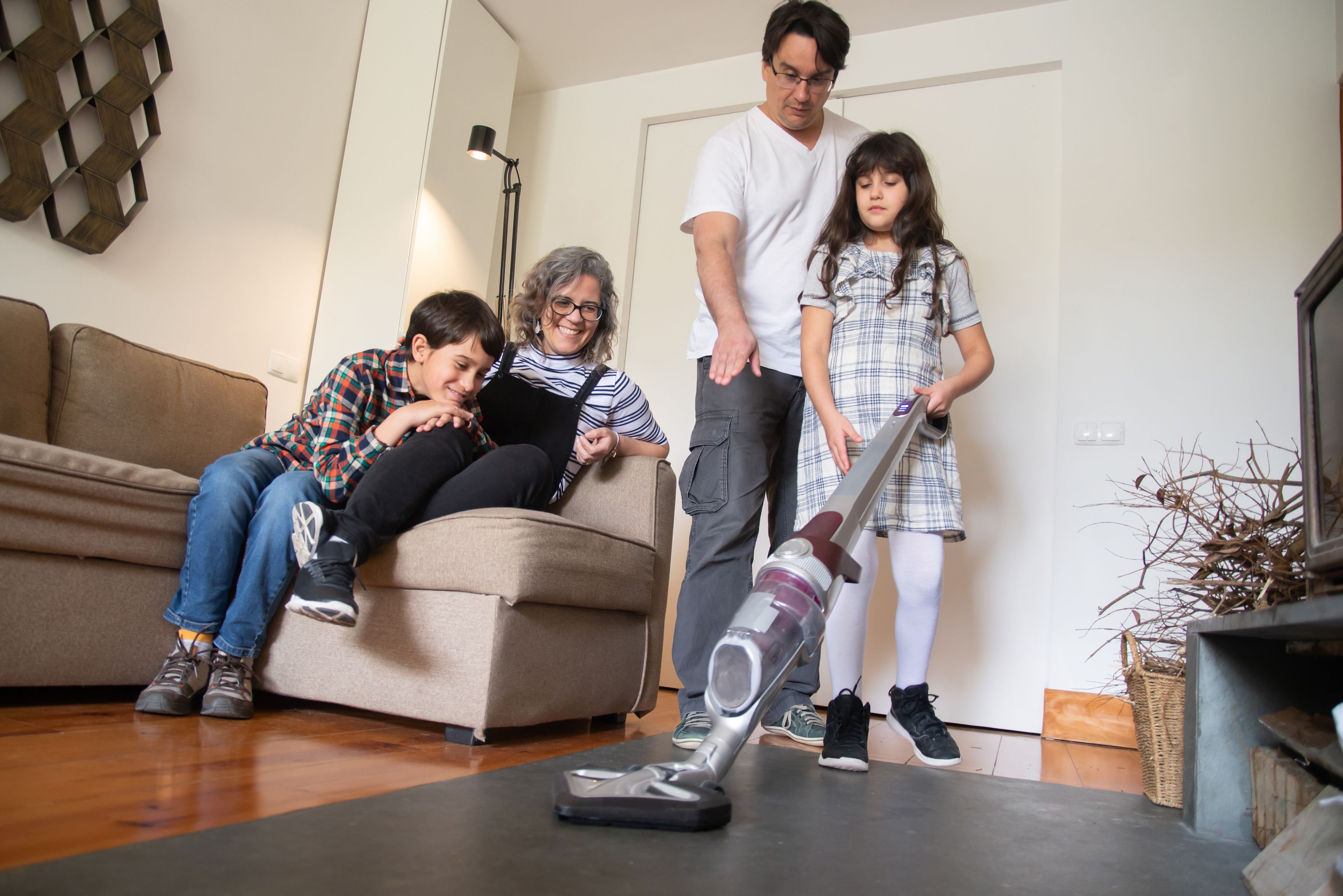
The photographs are illustrations, not product tests, and do not depict appliances certified by OtthonTrend.
European Commission · Do vacuum cleaners have an energy label?
European Commission · Vacuum cleaners: scope, requirements and consumer guidance
EUR-Lex · Notice concerning annulment of Regulation (EU) 665/2013
EUR-Lex · 2026 Commission report on energy labelling
Editorially reviewed content