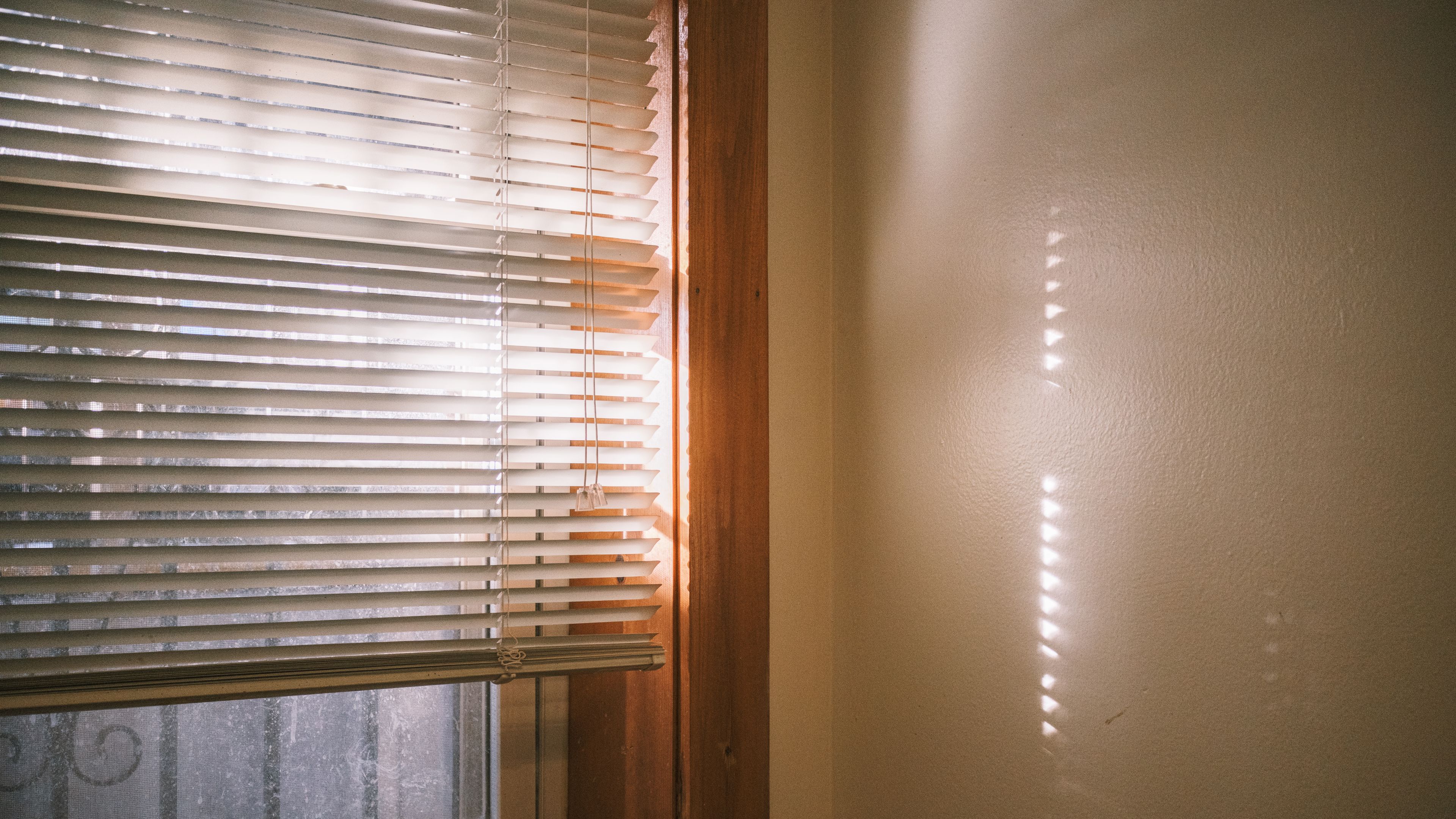
Why can an everyday cord be dangerous?
To an adult, the operating cord on a blind or curtain looks like a minor fitting. To a young child, it can become an accessible loop. The risk is not limited to an obviously dangling pull cord: continuous bead chains, inner lift cords, fixing devices and climbable furniture beside the window all need checking.
The sound starting principle is simple: wherever a child can reach a window, choose a cordless covering or one whose controls are inaccessible. Supervision alone is not an engineered safeguard.

1. Make cordless the first choice for a new purchase
In a child’s bedroom, living room and every space regularly used by young children, look first for spring-operated, motorised or wand-controlled products without cords. If a corded design is unavoidable, choose one with child-safety features built into the product and clear installation instructions for its tensioning or securing device.
“Tying it up high” is not the same as a safe design. The aim is to prevent a hazardous loop from forming at all, or to keep the control permanently inaccessible.
2. Audit more than the child’s room
Move room by room and inspect every internal window covering: roller blinds, Venetian blinds, Roman blinds, vertical blinds, curtains and roof-window shades. Check both sides of the window, the space behind the fabric or slats, continuous loops and the inner cords running through the blind.
Repeat the check at grandparents’ homes, holiday homes and rented accommodation. Every unfamiliar room offers a child new routes for climbing and reaching.
3. Keep every continuous loop permanently taut
On a blind operated by a continuous chain or cord loop, fix the tensioner or hold-down device to the adjacent surface exactly as instructed by the manufacturer, using the correct fastener. Simply hanging the loop on a hook from time to time is not enough: it should remain taut during and after use.
The wall construction matters. Plasterboard, timber, brick and concrete may need different fixings; ask a competent installer if in doubt. A loose screw or cracked plastic component needs immediate attention.
4. Secure the full length of every loose cord
After each use, wind all surplus pull cord in a figure-eight pattern around a firmly mounted cleat positioned at least 1.5 metres above the floor. Do not tie a knot that creates a larger loop, and do not leave cord hanging on the sill or behind a radiator.
Height is only a starting point. If a chair, toy chest or bed lets the child reach the cleat, the furniture layout must change as well.
5. Move climbable furniture away from windows
Keep cots, beds, highchairs, playpens, armchairs, sofas, benches and toy boxes away from the window. Ideally, place sleeping and play areas against another wall. Even low furniture can become a step once a child can stand or climb while holding on.
Include movable decor in the audit. A lightweight pouffe or step stool can provide access just as easily as a chair.
6. Inspect inner cords and cord stops
The external pull cord may look tidy while an inner lift cord between the slats can still form a large loop. Check that cord stops are present, cords are not worn, tensioners are intact and the blind operates without snagging.
Retrofit safety kits can help, but they do not remove every hazard from every older product. If the manufacturer has no suitable repair, or the mechanism is damaged and uncertain, replacement is the safer decision.
7. Safety checks continue after installation
Keep the operating and installation instructions. Recheck every fixing after cleaning, decorating, replacing a window or rearranging furniture. A child’s reach and climbing ability change with age, so a setup that once seemed inaccessible may not stay that way.
Show grandparents, babysitters and guests how to secure the cord after every use. A safety device only protects when it is used consistently.
A five-minute home checklist
- Is any cord or chain loop accessible?
- Is every continuous loop taut and firmly fixed?
- Is every loose cord fully secured at least 1.5 metres above the floor?
- Are beds, cots, chairs, sofas and toy boxes away from windows?
- Are inner cords, stops, tensioners and screws intact?
- Is the manufacturer’s manual available, and does the installation match it?
- Does every caregiver know what to do after using the blind?
This guide summarises general principles published by product-safety authorities. The manufacturer’s instructions take priority for any specific window covering; use a competent installer when in doubt.
UK Office for Product Safety and Standards – Child safety: blind cords
Editorially reviewed content